Tennis, chain, bangle or cuff
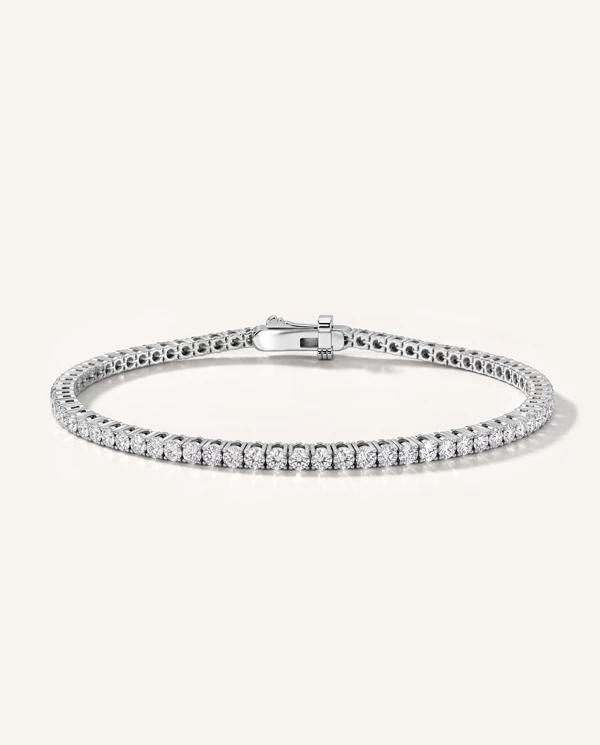
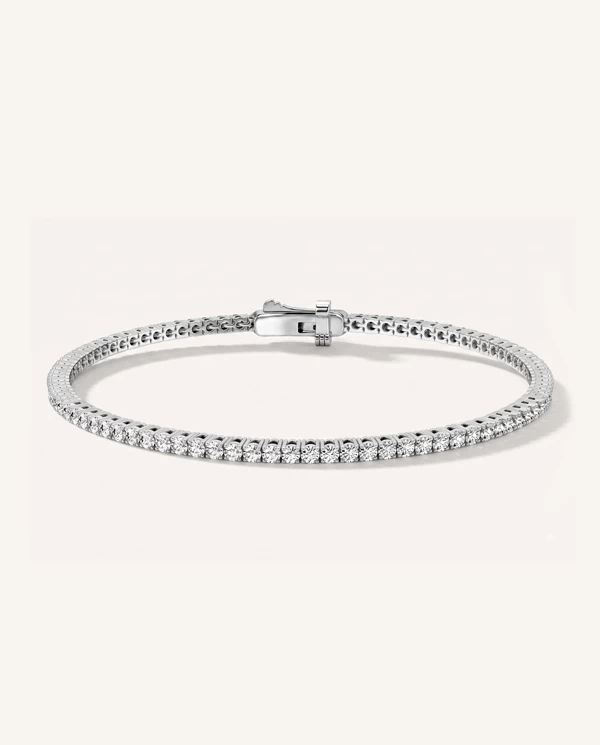
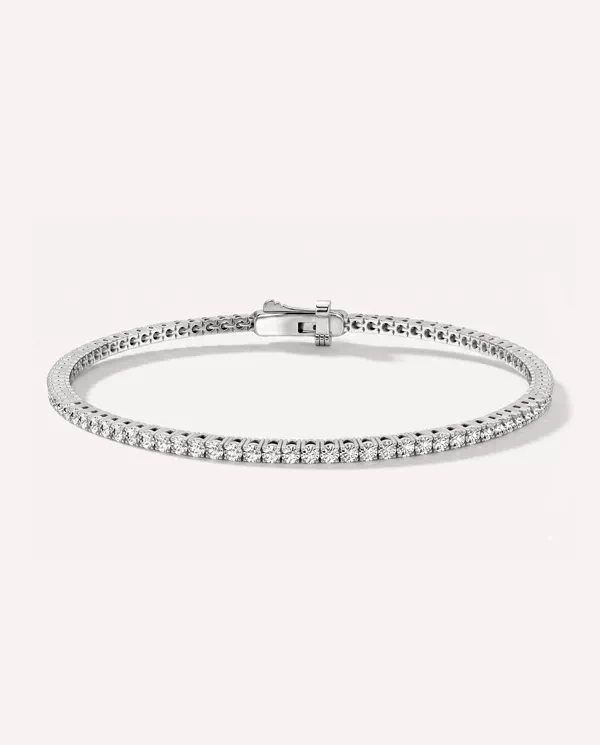
A tennis bracelet is the classic diamond line, a chain is the lightest and most casual option, and bangles and cuffs are rigid shapes with more presence. A tennis bracelet joins individually set diamonds of similar size, link to link, into a flexible band. Prong set lines throw more sparkle, while bezel set lines feel smoother against the skin. You can compare both in tennis bracelets.
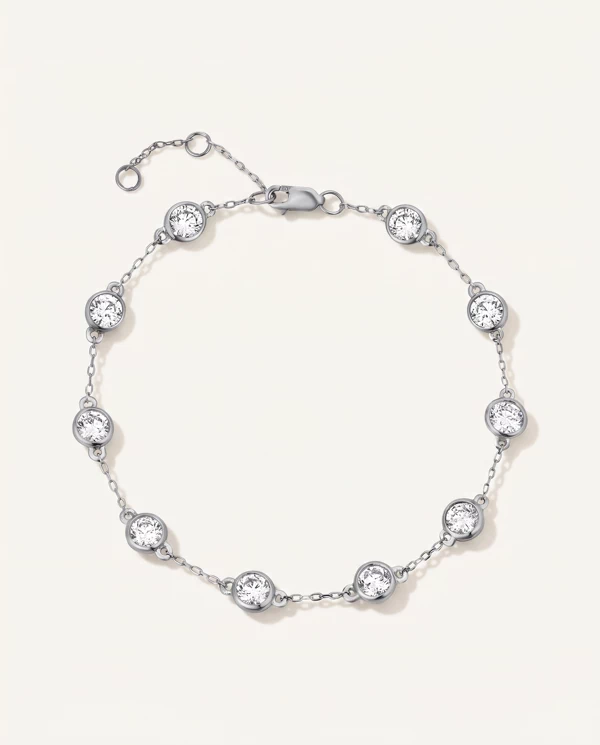
A chain bracelet keeps things light and pairs well with a watch. A bangle is a solid round that slips over the hand, and a cuff is rigid with an opening so it slides on from the side; both stack well and suit anyone who dislikes fiddly clasps. Browse bangles and cuffs for the rigid shapes.
What does a 1 carat diamond bracelet look like?
Delicate. A bracelet's total carat weight adds up every stone, so 1 carat spread around the wrist means many small diamonds, each a tiny fraction of that total. The result is a fine, bright line that layers easily with a watch or other bracelets and suits daily wear. As the total climbs, the individual stones grow and the line gets bolder, so 2 or 3 carats reads clearly at a distance. When you compare bracelets, check the total weight first, then how evenly the stones match along the length.
Getting the length and clasp right
Measure the wrist snugly, then allow a little room so the bracelet moves without sliding over the hand. About 7 inches is a common length for women, and the shorter 6 and 6.5 inch sizes suit slimmer wrists. The line should have enough slack to slip a finger underneath: too tight and the links strain, too loose and it catches on sleeves and door handles.
On a tennis bracelet, the usual fastening is a box clasp backed by a safety catch. That gives you two layers of security, so if the main clasp is knocked open, the bracelet stays on your wrist. Check that both close with a firm click every time you put it on.
Shop diamond bracelets by metal and stone
Tennis bracelets here come in 14K white, yellow or rose gold, 18K gold and platinum, so you can match the bracelet to a ring or watch you already wear. For the stones, lab grown bracelets put more total weight on the wrist for the same budget, since diamonds grown in a lab cost far less than mined ones of equal size and grade.